

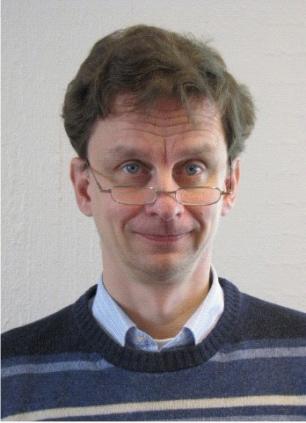
Kai Juhani Vuorilehto
Adjunct professor at Aalto University Helsinki (Finland)
Bio
Born 30.05.1965 in Imatra, Finland
Studies:
M.Sc., chemical engineering, Helsinki University of Technology (HUT), 1990
-major subject: physical chemistry and electrochemistry
-thesis: “Electrochemical absorption of hydrogen into palladium in cold fusion
experiments”
Doctor of technology (chemistry), Helsinki University of Technology, 1997
-thesis: “Applications of three-dimensional electrodes and the problem of
potential distribution”
Battery related work experience:
1993-95 Visiting scientist in Germany: Dechema e.V., Frankfurt
1997-01 Vaisala Oy (scientist responsible for battery research & development)
POST DOC. in Germany: Research centre of Jülich (postdoc.)
2004-06 University of Helsinki (postdoc.)
2006- Battery consultant (in practice CTO of European Batteries ltd)
2006- Adjunct professor for “Electrochemical energy solutions” (=batteries)
Numerous patents and publications in international refereed journals
Abstract
How to develop a lithium-ion battery with maximum safety?
Lithium-ion battery safety is one of the main challenges that must be solved before large lithium-ion batteries will penetrate the market. A burning mobile phone with a small battery can be handled but a burning electric car could kill people. A single company producing dangerous batteries easily destroys the reputation of the whole battery industry, not only its own reputation.
Lithium-ion battery safety consists of four levels:
1) Safe chemistry to avoid thermal runaway, lithium plating and similar chemistry related problems.
2) Safe production technology to avoid foreign metal particles and other sources of short circuit.
3) Safe battery management system to avoid overcharge, over-discharge, overheating and other abuse circumstances.
4) Fuses, pressure valves etc. in case everything goes wrong despite maximum safety.
推广信息
 评论表单加载中...